Contents
- 1. Why I Went Back to Burning Fuel for Warmth
- 2. A Century of Platinum Catalysis: The History of the Peaco
- 3. How to Choose: The Pocket Warmer Landscape
- 4. Why I Chose the Korean-Made Peacock Giant
- 5. One Year On: The Pros Far Outweigh the Cons
- 6. A Hidden Trick for Outdoors People: Keeping Batteries Ali
- 7. Before Winter Comes
1. Why I Went Back to Burning Fuel for Warmth
On January 24, 2026, I placed an order on JD.com: a Korean-made PEACOCK pocket warmer in the Giant size, plus two 355 ml cans of Zippo lighter fluid. Total: ¥315 (about US$43).
Honestly, I’d had enough of USB rechargeable hand warmers by then — heavy, short-lived, always hunting for an outlet halfway through the day, sitting in my pocket like a cold brick. Then one evening I remembered the little brass coal-ball stoves from my childhood: a small ball tucked into the firebox, no open flame, yet warm for hours. I can still remember that faint smell of fuel.
So I went looking for something like it, following a thread from “platinum catalyst hand warmer” to “Peacock pocket warmer.” I didn’t hesitate at checkout, because what I was after was never “a more advanced hand warmer” — it was a slower, longer-lasting, more fragrant kind of warmth.
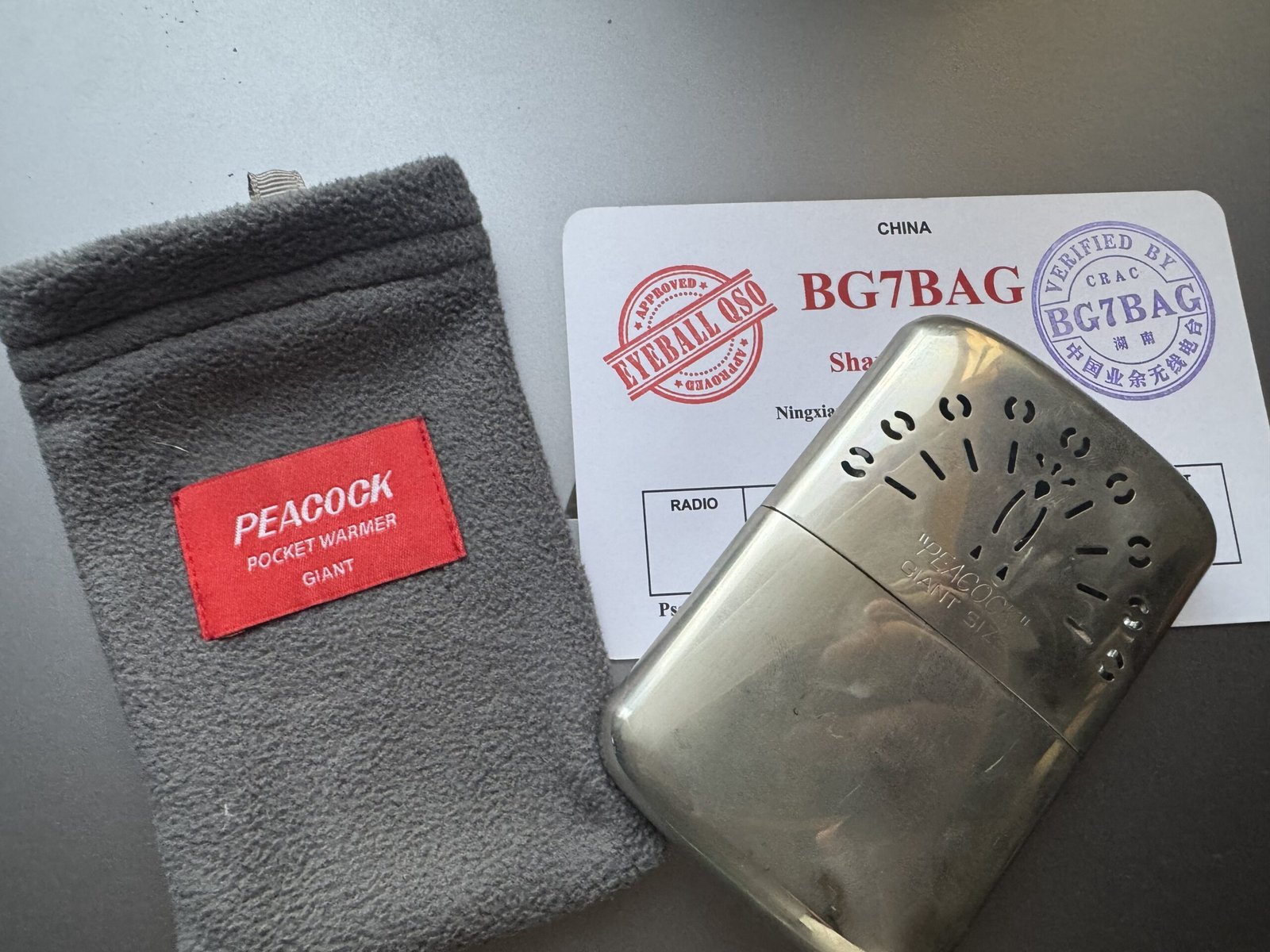
2. A Century of Platinum Catalysis: The History of the Peacock Warmer
The Peacock warmer’s story goes back to 1923, when Japanese inventor Niichi Matoba patented a method of generating heat through platinum-catalyzed oxidation, and went on to found the Hakkin Kairo (“platinum warmer”) company. The principle is simple: fuel vaporizes inside the sealed body and passes over a burner head coated with a platinum catalyst, producing flameless catalytic oxidation. The burn is so slow that one fill keeps it warm for well over ten hours — sometimes up to twenty-four — at a steady temperature that never gets too hot to hold.
During the war — according to the company’s official history — Hakkin’s factory was destroyed in the 1945 air raids but rebuilt the very next year. In 1962, a Japanese Antarctic research expedition carried Hakkin warmers to the pole — about as harsh a reliability test as it gets. The company became Hakkin Warmers in 1963, launched a reusable eco-friendly model in 1997, adopted “Peacock” as its unified international trademark in 2006, and released a centenary edition in 2023. A century of service from a little brass stove.
PEACOCK’s logo is a peacock with its tail fanned, and the ventilation holes on the body are cut in the shape of tail feathers. It’s not just a tool — it’s a small object with decades of industrial heritage behind it.
3. How to Choose: The Pocket Warmer Landscape
Before buying, I mapped out the options.
Japanese-made Peacock (Japan version): The genuine article — solid brass workmanship, long catalyst life, long burn times, usually ¥300–500. Downsides: complicated sales channels, fakes on the market, easy for beginners to get burned.
Korean-made Peacock: Licensed by Japan, manufactured in Korea. Same core structure and technology as the Japanese version, very close in looks and catalyst workmanship. Usually cheaper than the Japan version, and accessories and after-sales are easier to find on Chinese e-commerce. This is the one I bought, in the Giant size.
Zippo (US version): Zippo launched its own catalytic warmer around 2010. Steel body with a wind guard, runs hotter. Pros: global warranty and brand recognition. Cons: burns fuel faster, less refined than the Peacock, less stable temperature control. If you’re buying from the US, it’s also the easiest of the bunch to find — see on Amazon or browse current listings on eBay.
Disclosure: As an Amazon Associate I earn from qualifying purchases. As an eBay Partner, I may be compensated if you make a purchase.
Lamp (Taiwan): A Taiwanese domestic brand, friendly price, decent build. Fine as a first taste, but catalyst life and burn time generally fall short of the Peacock.
Chinese domestic brands: More choices in recent years — Shuangqiang (双枪), Yidong (怡冬), Butterfly (蝴蝶牌) and others have pushed prices down to tens of yuan, unbeatable value. To be fair, if all you want is warm hands, a domestic warmer does the job — some even run hotter. But in fit and finish, body sealing, catalyst consistency, and long-term durability, there’s still a gap. As the saying goes in enthusiast circles: you buy a Peacock for peace of mind; you buy a domestic one for experimentation.
4. Why I Chose the Korean-Made Peacock Giant
Three reasons.
First, the burn time. A full fill in the Giant size keeps me warm for well over ten hours in real use — pocket it in the morning, still faintly warm when I get home at night. Far less fuss than a rechargeable that needs charging twice a day.
Second, the gentle heat. The Peacock doesn’t blast like a campfire; it’s a steady, even warmth, just right through the flannel pouch in a pocket. Southern China’s winter is a damp cold, and this kind of warmth suits it perfectly.
Third, the smell. Some people find the fuel smell unpleasant. I’m the opposite — I’ve had a strange fondness for the smell of kerosene and gasoline since childhood. Every time I light it and catch that faint scent, I’m back around the stove of my childhood winters.
The Giant size also fits a man’s pocket just right — not so small that burn time suffers, not so big it won’t fit. Add in easy parts availability and a fair price for the Korean version, and it was the obvious pick.
5. One Year On: The Pros Far Outweigh the Cons
The good
- Remarkable endurance. One cup of fuel (about 12 ml) lasts well over ten hours. Two 355 ml cans of Zippo fluid got me through the entire winter. That “fill once, warm all day” feeling is something no rechargeable can offer.
- No range anxiety. Fill it before you leave — no power bank, no hunting for outlets. Mountains, countryside, highway rest stops: as long as you have fuel, it keeps going.
- Flameless and reasonably safe. Despite the name, it works by catalytic reaction — no visible flame in normal use. As long as you don’t shake it hard or blow directly at the burner, it’s manageable. One caveat: like anything that burns fuel, it consumes oxygen — don’t leave it smoldering in a sealed tent or sleeping bag without ventilation.
- Durable and repairable. The brass body should last for years. The catalyst burner and the cotton wadding are consumables, cheap and easy to find online. If it ever stops heating, a new burner or a wadding adjustment usually brings it back.
- Pure emotional value. Holding it, pocketing it — it just makes you happy. Every time I’ve pulled it out at a gathering, someone’s asked to have a look; one older friend had me order one for him on the spot.
The not-so-good
- First lighting takes practice. Beginners tend to overfill or under-light, and the catalyst never fully activates. It took me two or three tries to get the feel: fill until no leak when inverted, hold the flame to the burner for five to eight seconds, then slip it into the pouch.
- Bare brass runs hot. Right after lighting, the metal body is hot to the touch without the pouch — I once handed it to a friend who fumbled it, and it picked up a small dent on the floor. Doesn’t affect use, but it stung. Lesson: the flannel pouch isn’t decoration, it’s essential.
6. A Hidden Trick for Outdoors People: Keeping Batteries Alive
Beyond warming hands, there’s a use many overlook: a pocket warmer is an excellent way to keep lithium batteries warm.
If you hike, camp, or shoot outdoors in winter, you carry a pile of electronics: GoPro, DJI Action camera, radios, satellite phone, flashlight — plus the power banks that charge them. In the cold, lithium batteries lose activity fast: plenty of charge left, but it won’t go in or come out, and the device just quits.
The fix is simple: keep the devices in an inside pocket or an insulated pouch together with the warmer. A Peacock runs for ten-plus hours on one fill, steady heat, no flame — exactly what batteries need to stay in their working range. In my experience, a power bank kept against the warmer charges noticeably better than one left out in the cold; I can take the action camera and the radio out without retreating to the car to thaw them every half hour.
A USB hand warmer simply can’t do this — its battery would never survive a full day outdoors.
7. Before Winter Comes
A year in, I’m thoroughly happy with this little ¥315 stove. It’s not the most advanced heater, nor the cheapest — but it delivers exactly the right kind of warmth: steady, lasting, fragrant, with a sense of history.
If you’re also huddling through the damp cold of a southern winter, or you’re the type who still heads for the mountains when it’s freezing, find yourself a pocket warmer and give it a try. The fuel smell may put some people off — but for me, that’s precisely its charm.
Winter is coming again, and my Peacock is ready for another season.
☕ 请作者喝杯咖啡 / Buy me a coffee
如果本站对你有帮助,欢迎赞赏支持,谢谢!
If this site helped you, tips are warmly appreciated.

Ko-fi 赞赏 / Ko-fi